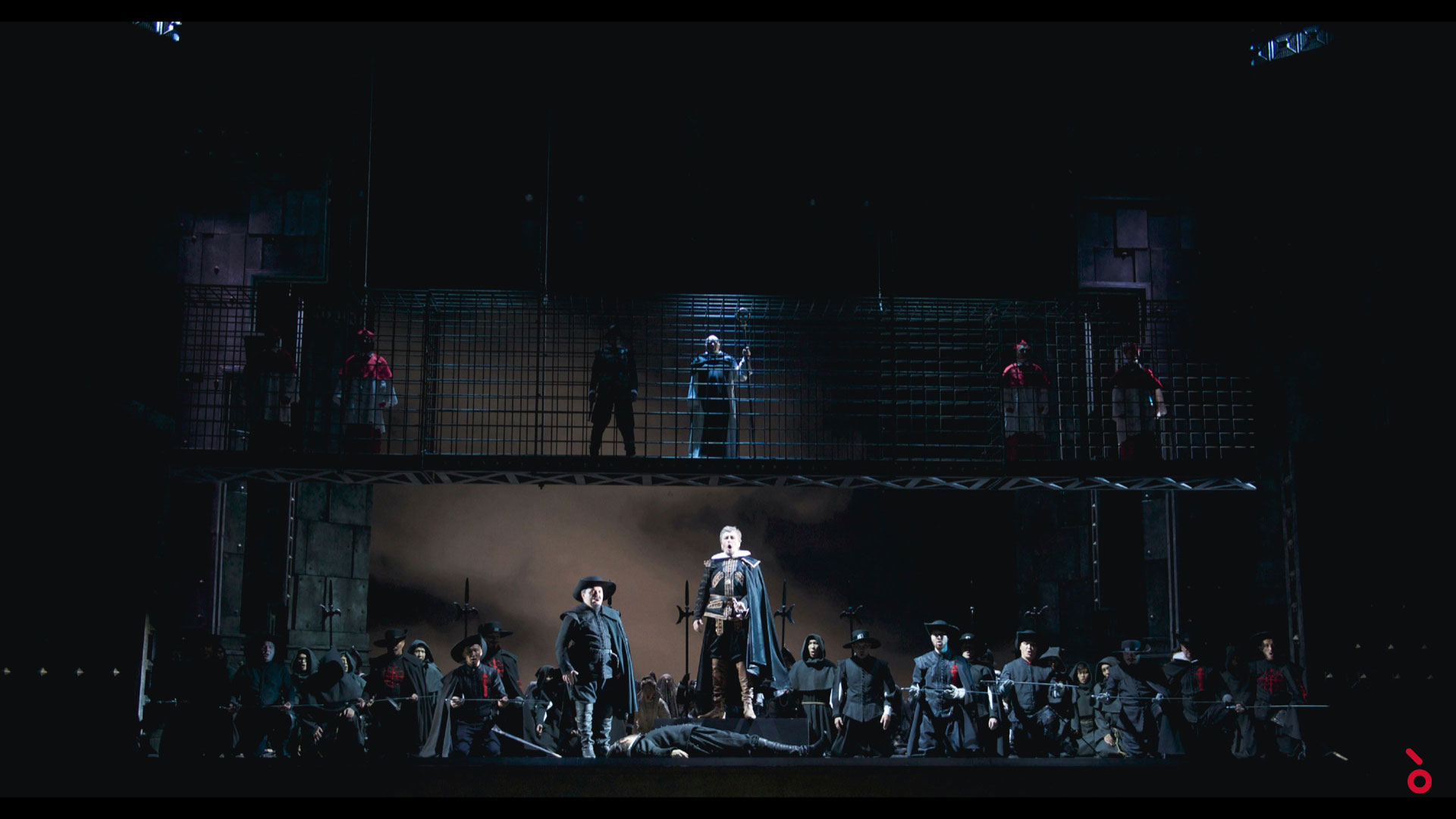
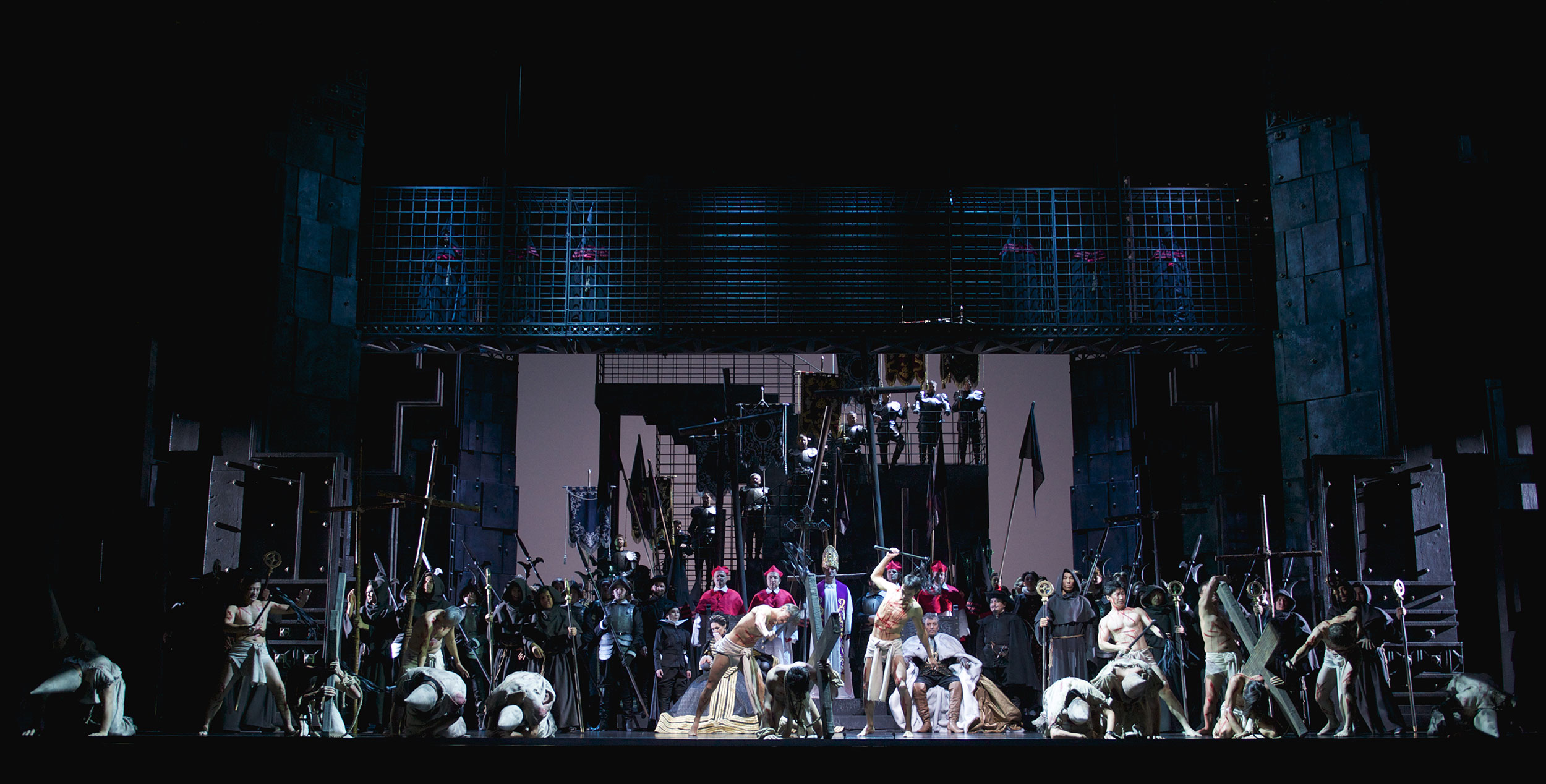
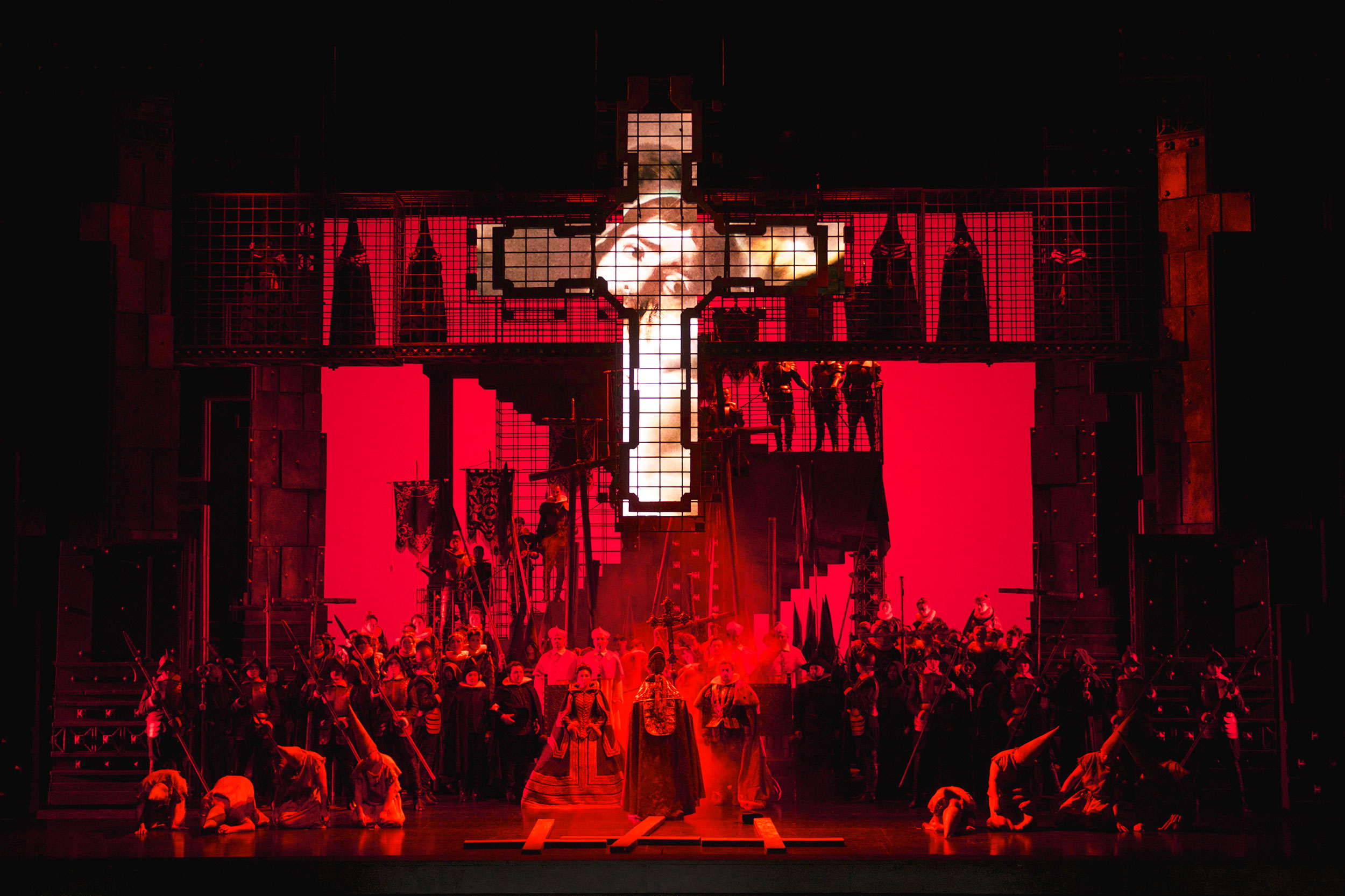
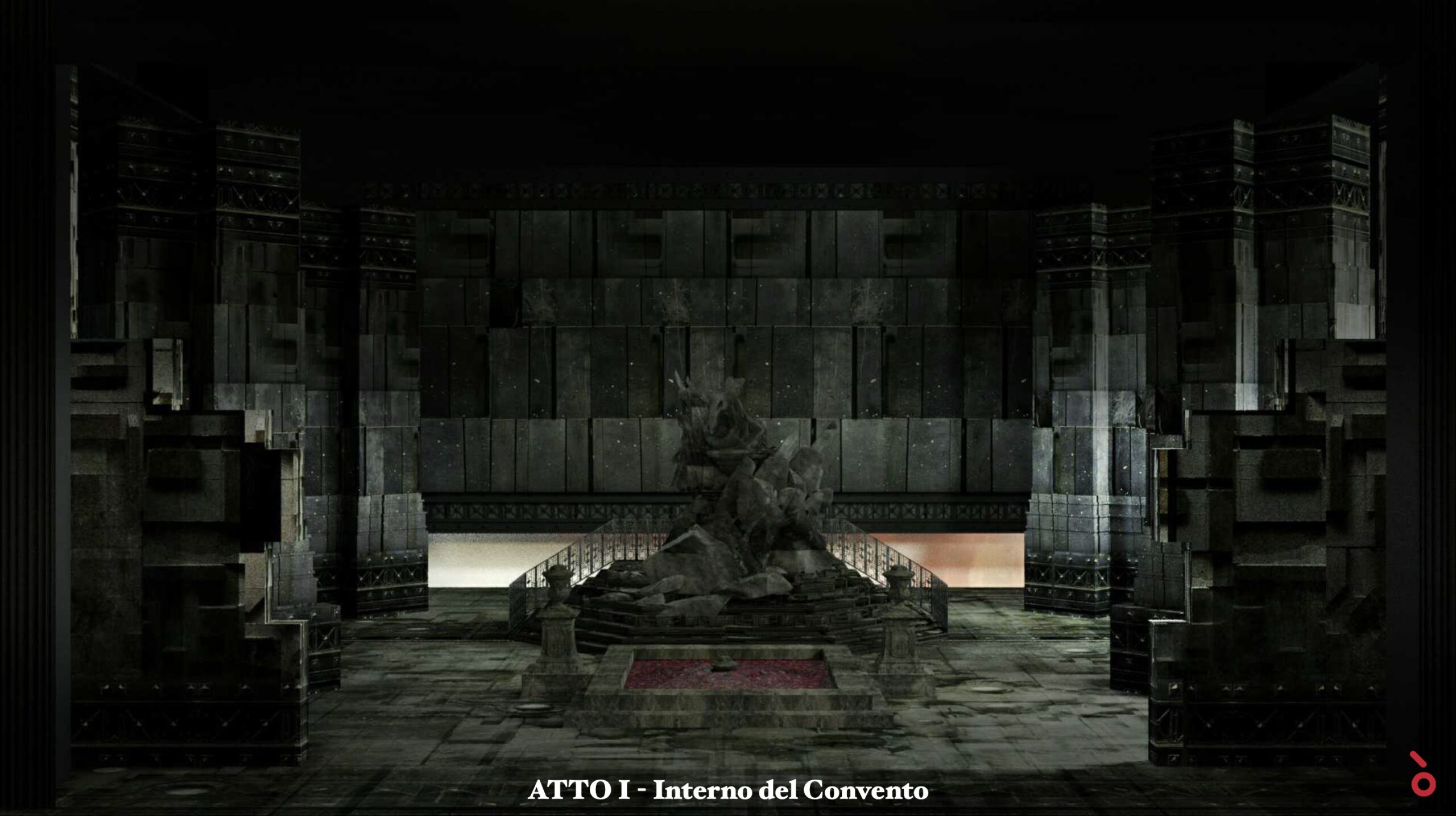
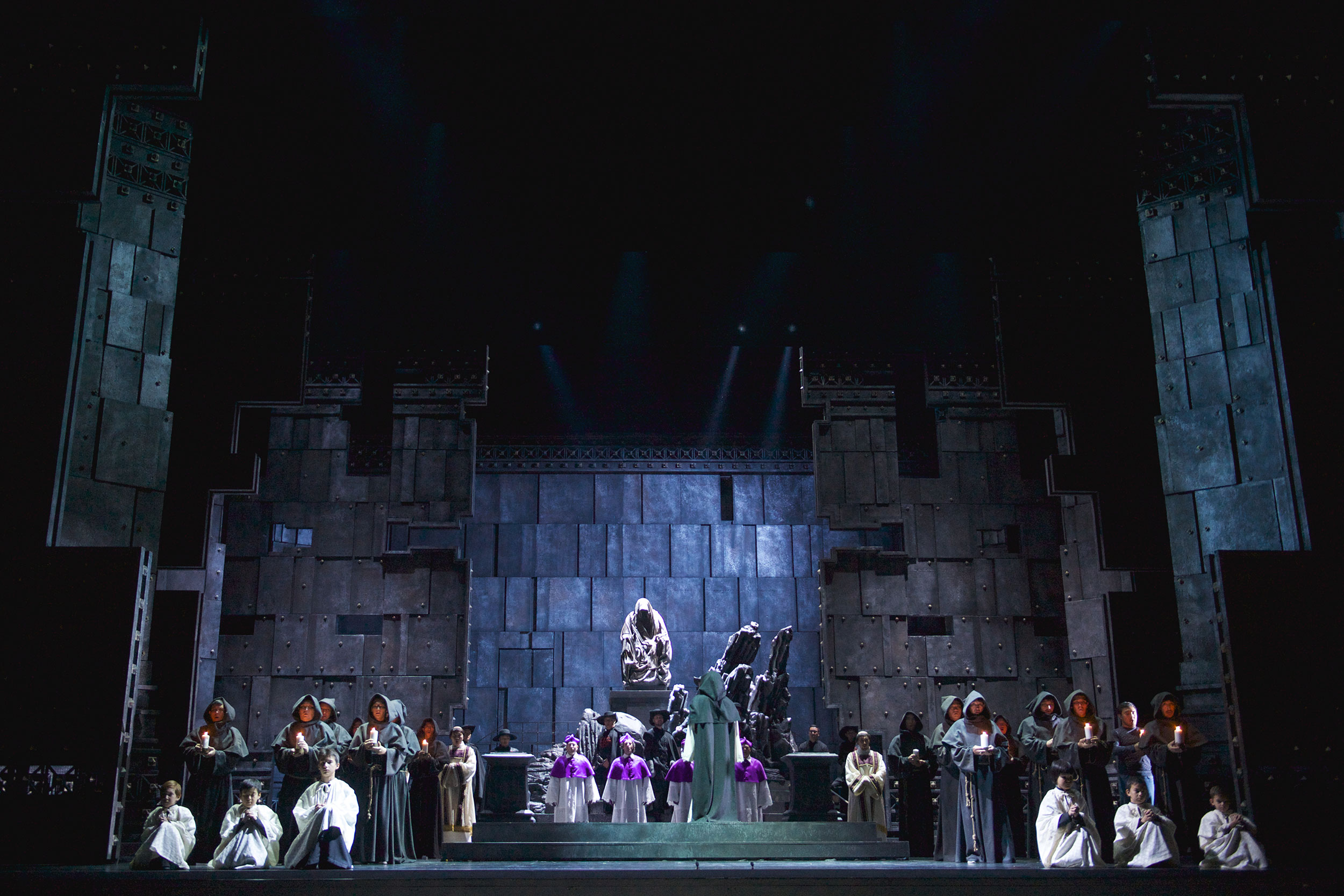
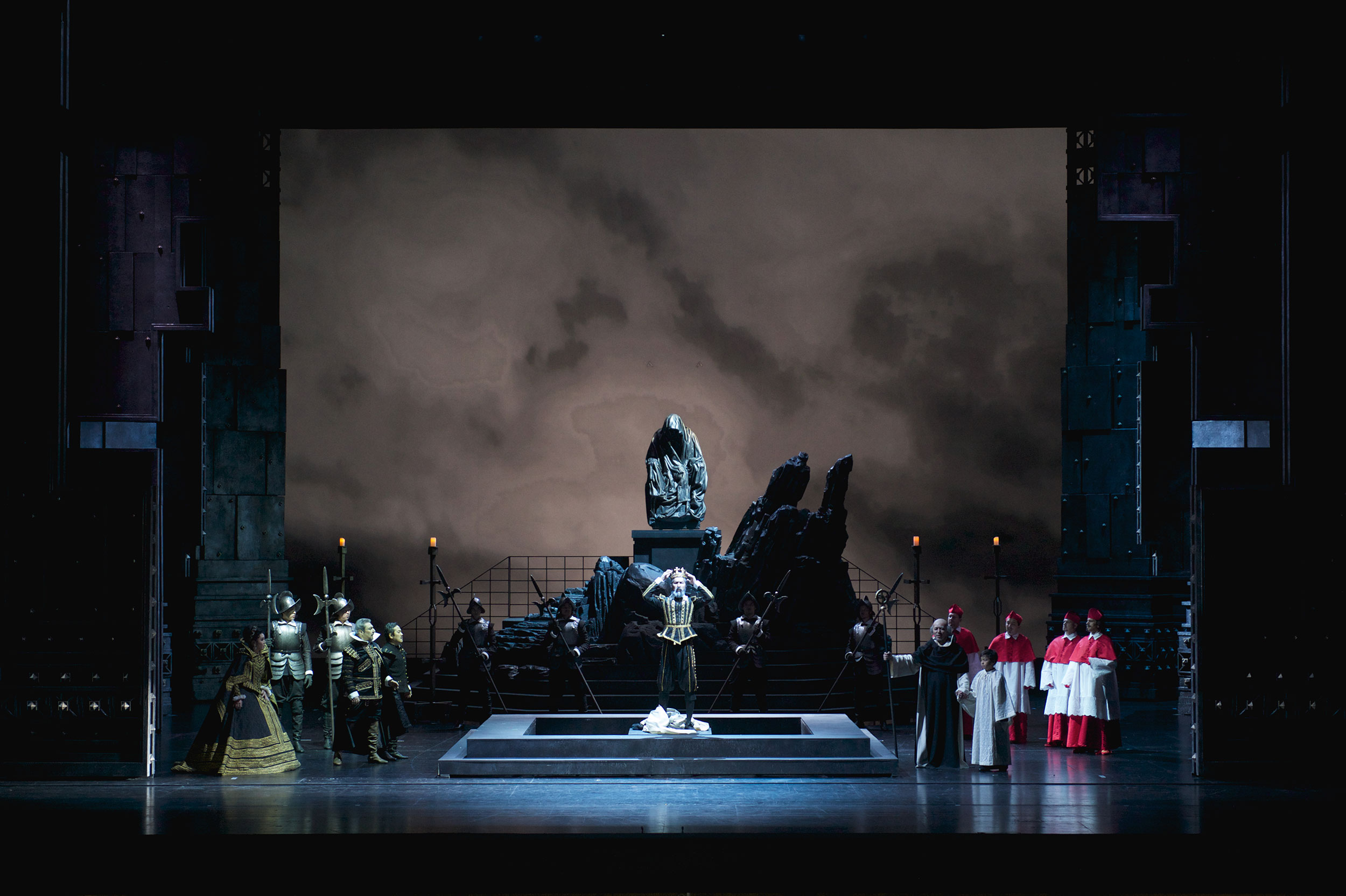
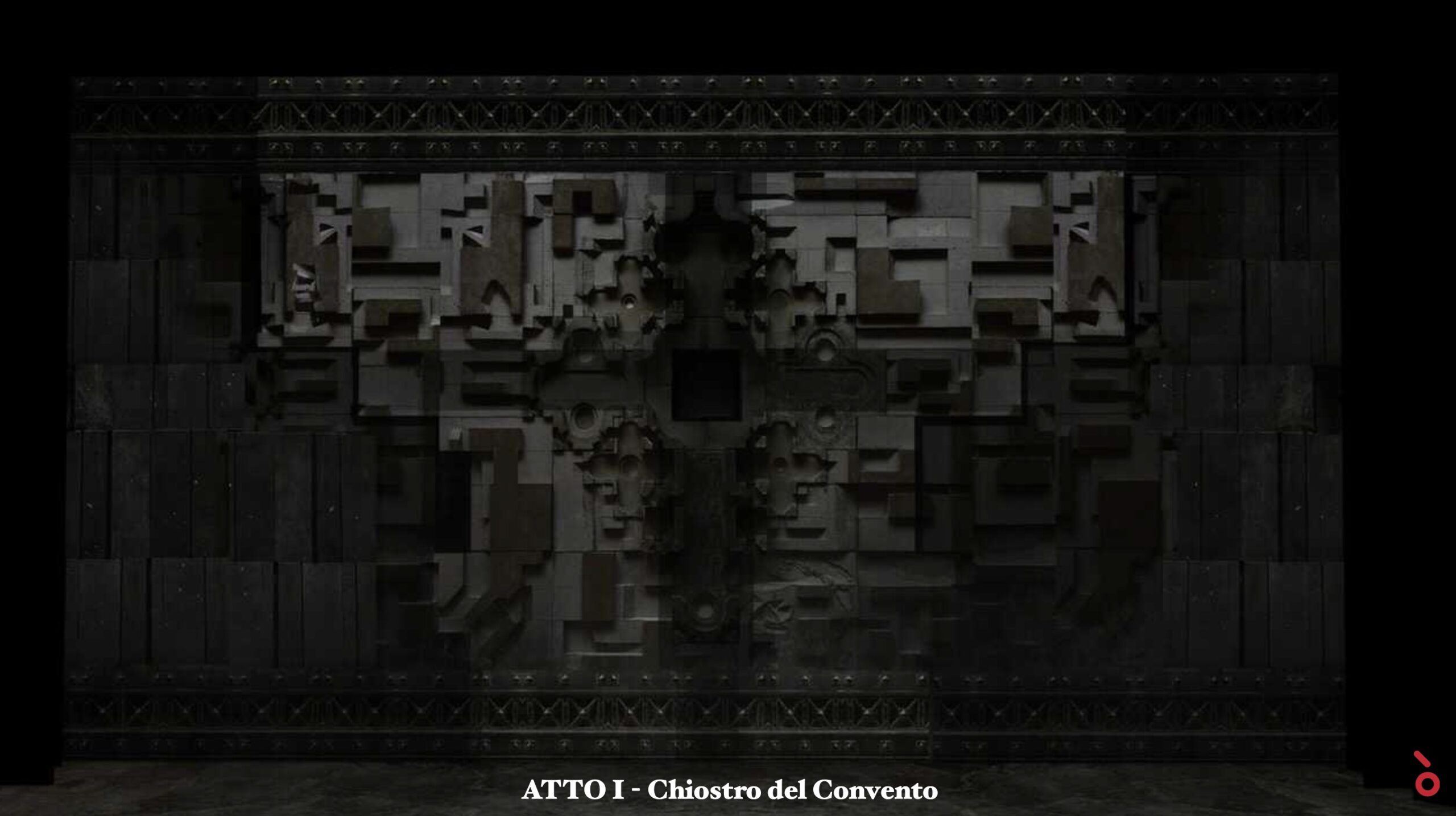
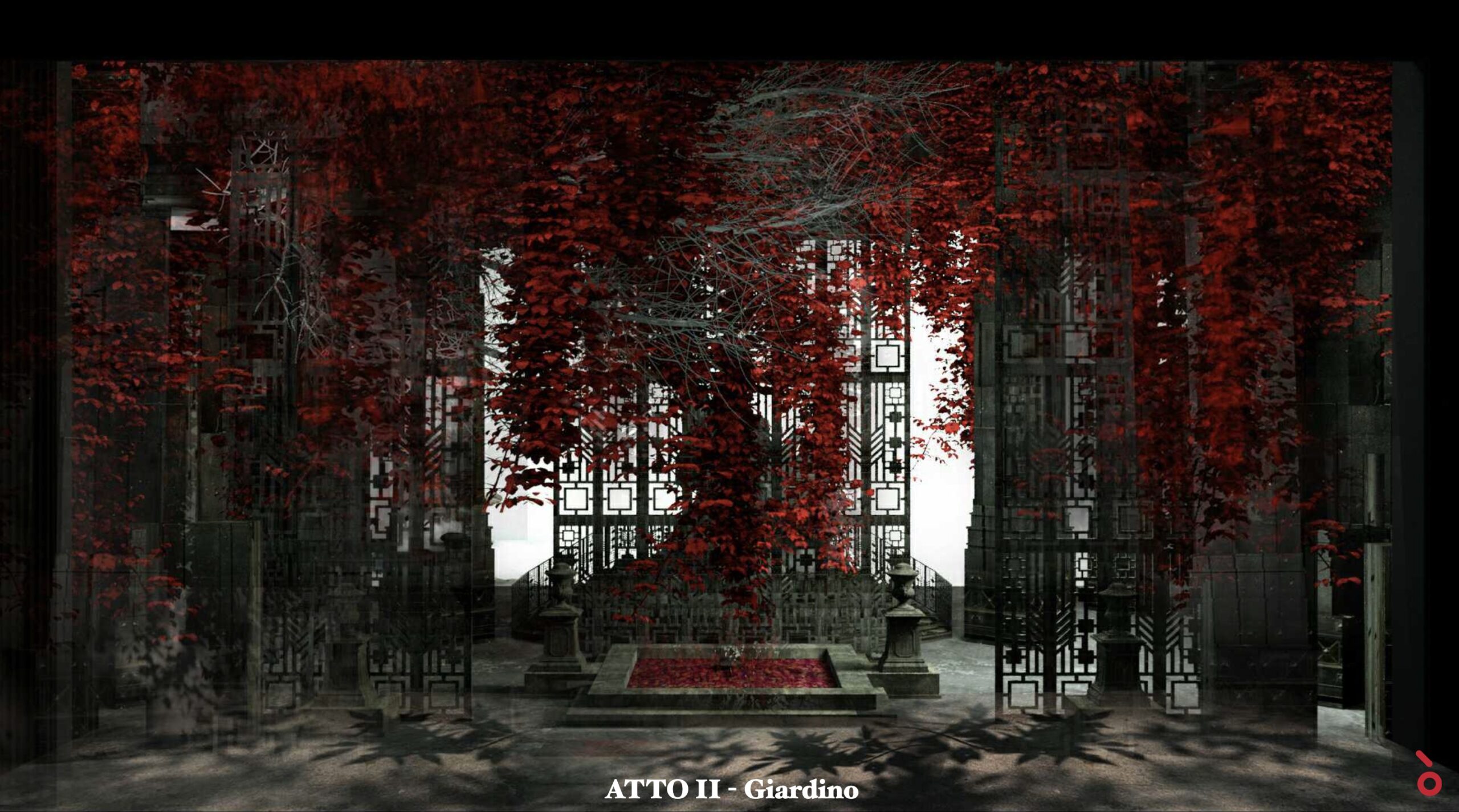
Don Carlo
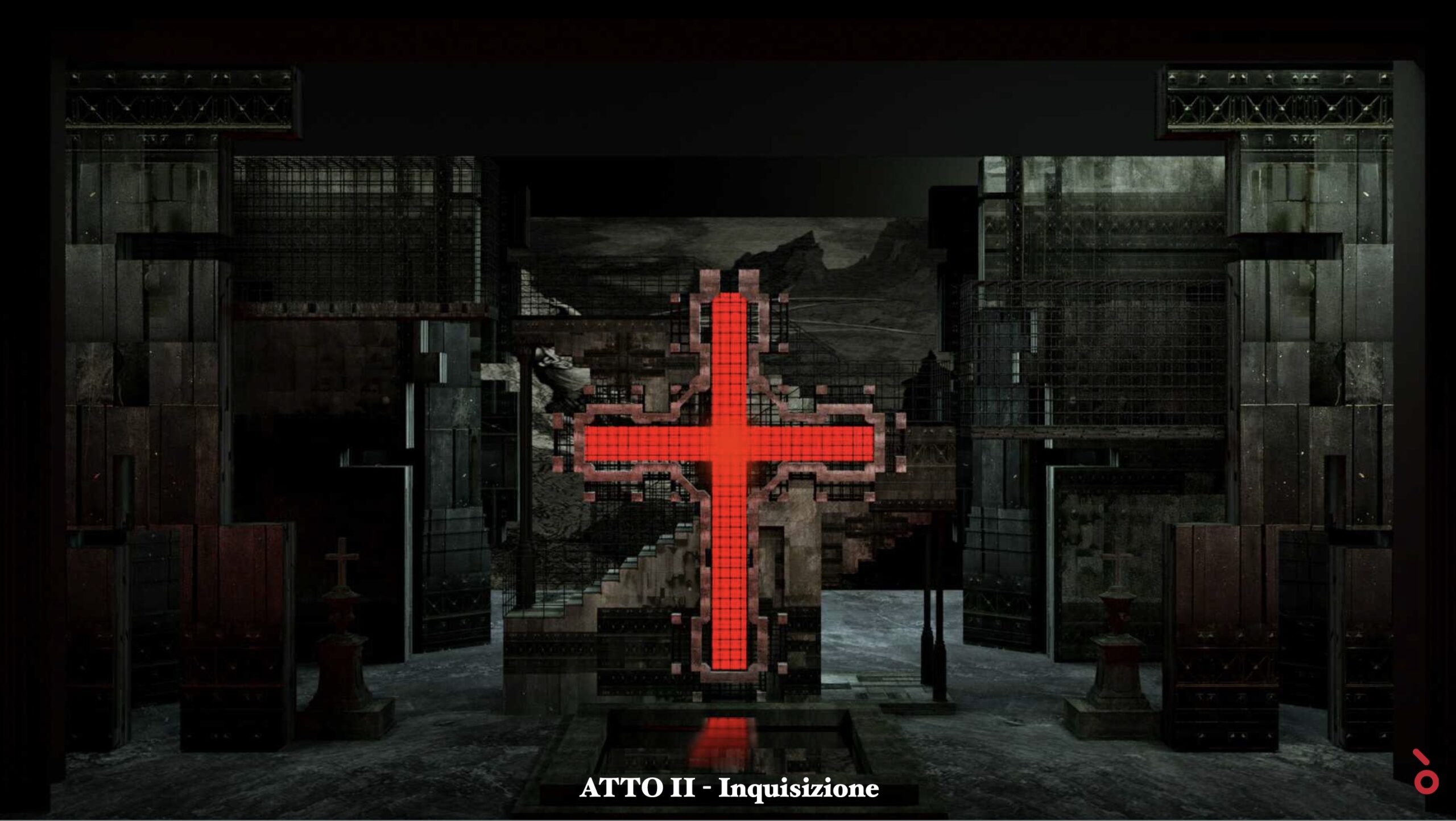
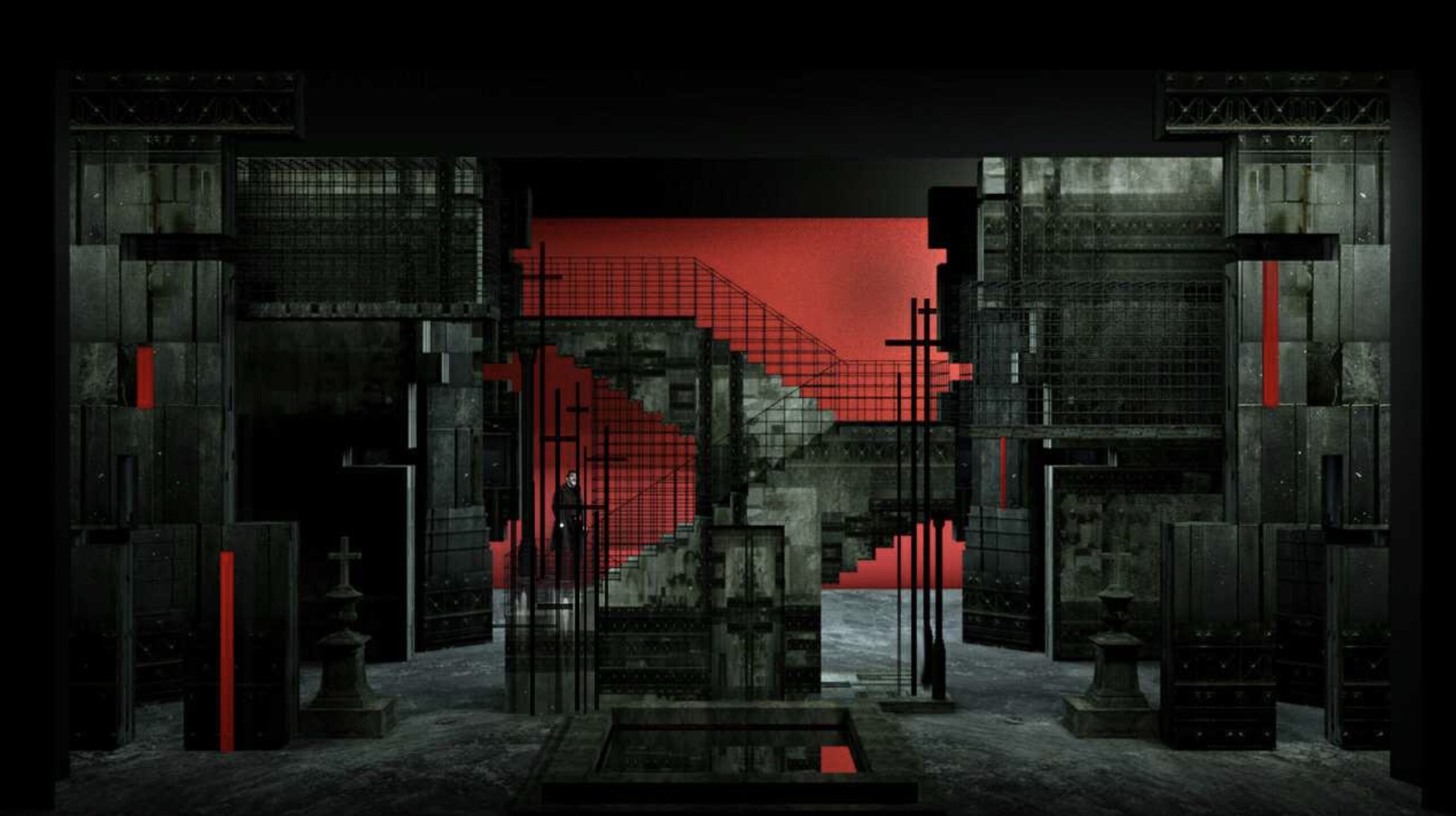
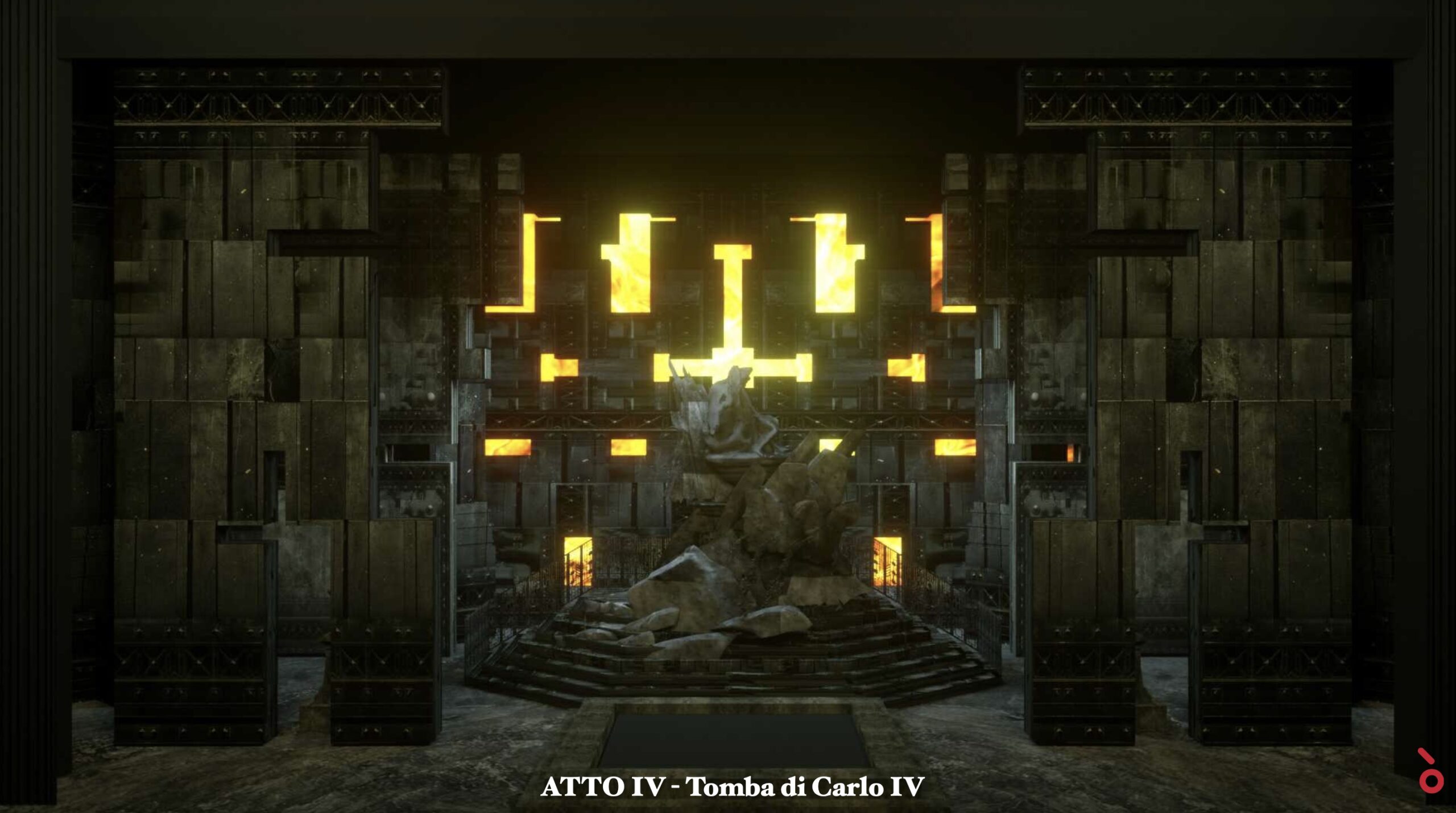
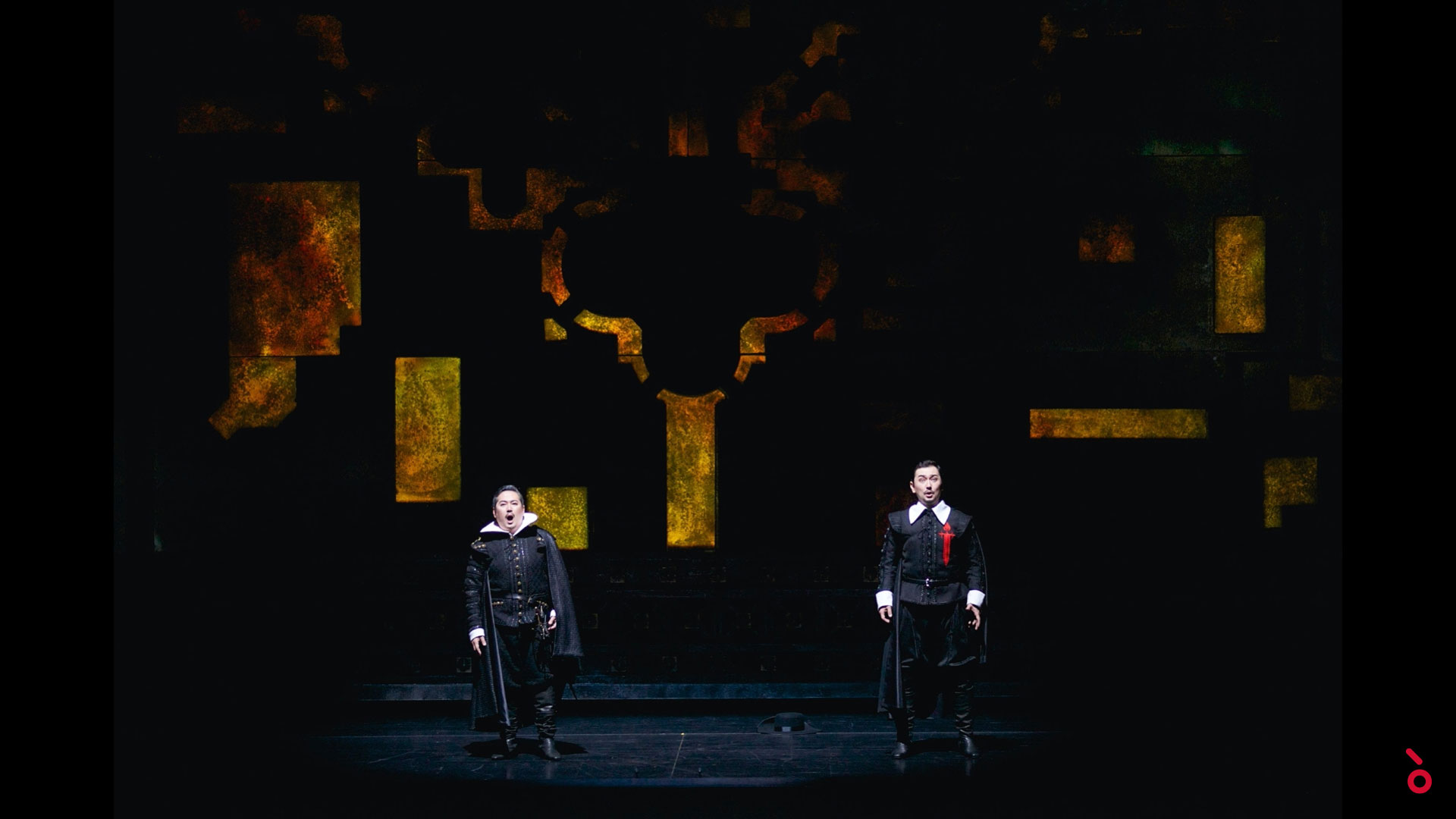
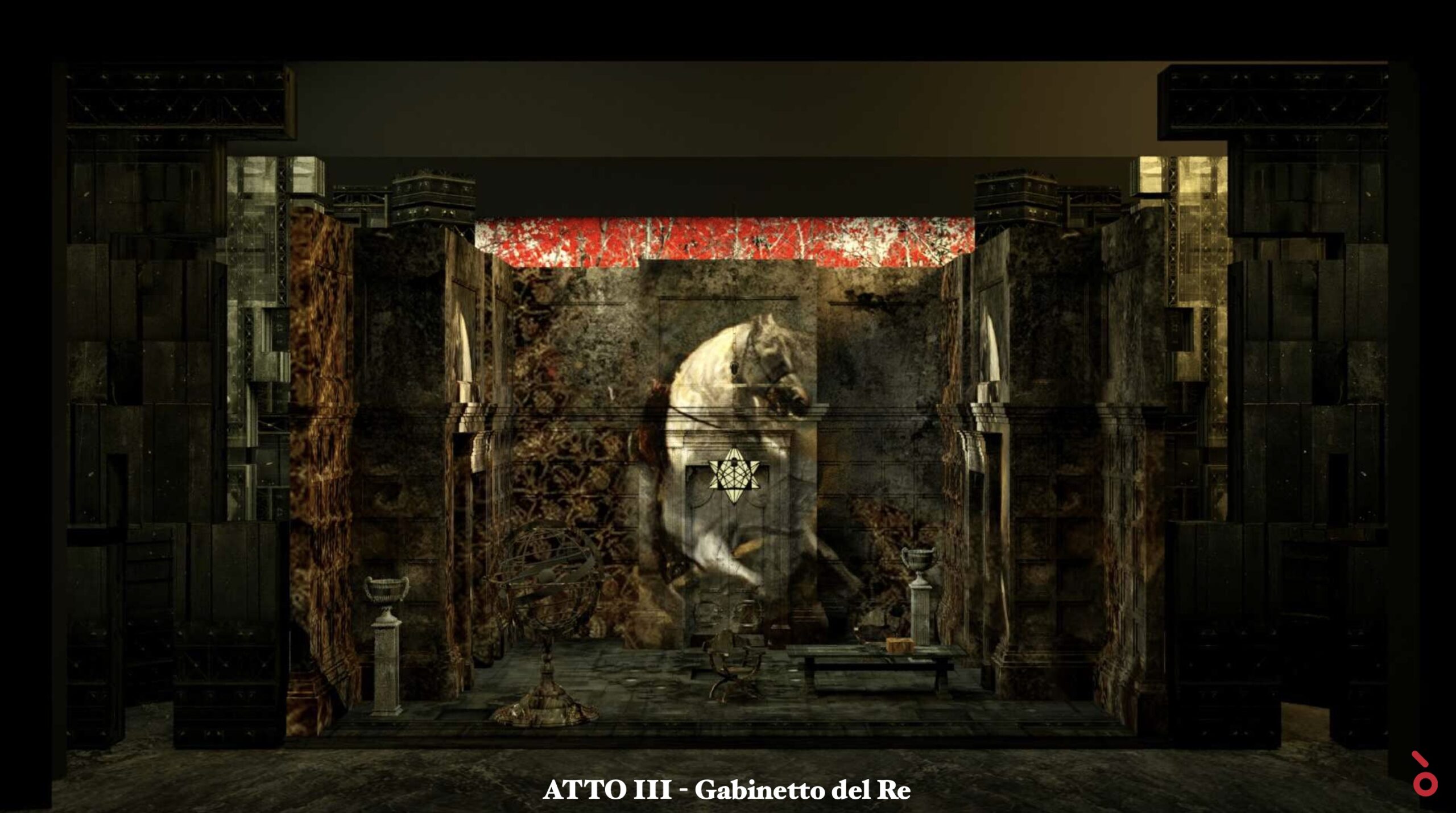
scene e bozzetti
Astana Opera, Turkistan, (KAZ) 2023
Libretto by Joseph Méry and Camille du Locle based on the eponymous drama by Johann Christoph Friedrich von Schiller.
Don Carlos is the largest and most ambitious of all Giuseppe Verdi’s operas. It was commissioned to the composer in November 1865 by the director of the Théâtre Impérial de l’Opéra in Paris, where it premiered on 11 March 1867.
The music of Don Carlos rather surprised the audience than gave pleasure. The imperious power that formed the basis of Verdi’s creative genius was manifested in the mighty simplicity that had already gained the maestro acclaim and fame, but in the opera, it was reinforced by the extraordinary development of harmonic means, sophisticated sonority and new melodic turns. Having already won recognition by creating such masterpieces as Rigoletto, La traviata and Il trovatore, Verdi himself understood that he wrote the opera, which marked a turn in his creative work.
To stage the opera in Italy, it was translated the same year, entailing some changes and alterations in the music. Between 1882 and 1883, Verdi significantly revised the opera; Antonio Ghislanzoni (1824–1893), who wrote the libretto to Aida, took part in the creation of new scenes. This version, staged at the Milan Theatre on 10 January 1884, was much shorter than the first one.
During Verdi’s lifetime, but without his participation, the third version of the opera was created. Currently, the opera is usually staged in a mixed version.
The goal of all these changes was to bring the opera as close as possible to its literary source – Friedrich Schiller’s eponymous tragedy, created in 1787 and telling about the Eighty Years’ War, the struggle for independence from Spain and the court intrigues of King Philip II.
Operas based on Schiller’s works are quite popular these days. The most well-known of them are Don Carlos, Maria Stuarda, William Tell, I masnadieri, The Maid of Orleans, Luisa Miller and The Bride of Messina.
There is no ‘canonical’ version of the opera. Relatively speaking, there are three versions: the 1867 original version in French, the 1884 four-act version in Italian and the 1886 five-act version in Italian. However, almost every theatrical production has certain variations: inserts of various scenes from different versions or, on the contrary, cuts, or both.
The opera Don Carlos stands out from the entire context of the composer’s creative work, but remains one of the greatest creations he penned.
At present, both the French and the Italian versions of the opera have been holding the stages of the world’s major opera houses.
Director: Davide Livermore
Conductor: Alan Buribayev
Set Design: Gio Forma Studio
Costume Designers: Sofia Tasmagambetova / Pavel Dragunov
horus Master: Yerzhan Dautov
Lighting Designer: Vincenzo Raponi
Video Projection: D-WOK Srl
Vocal Coach and Consultant: Ala Simonishvili
Assistant Directors: Giancarlo Judica Cordiglia, Salvatore Nicosia / Yevgeniy Chainikov
Assistant Conductors: Ruslan Baimurzin / Elmar Buribayev
Assistant Costume Designer: Natalia Fedorova