Morricone Reloaded
Cantori Design Challenge 2026, Flexplorer 146, Cantiere delle Marche
Developed for the Cantori Design Challenge 2026, Morricone Reloaded explores how Giò Forma’s approach “Everything is a stage” could shape life at sea.
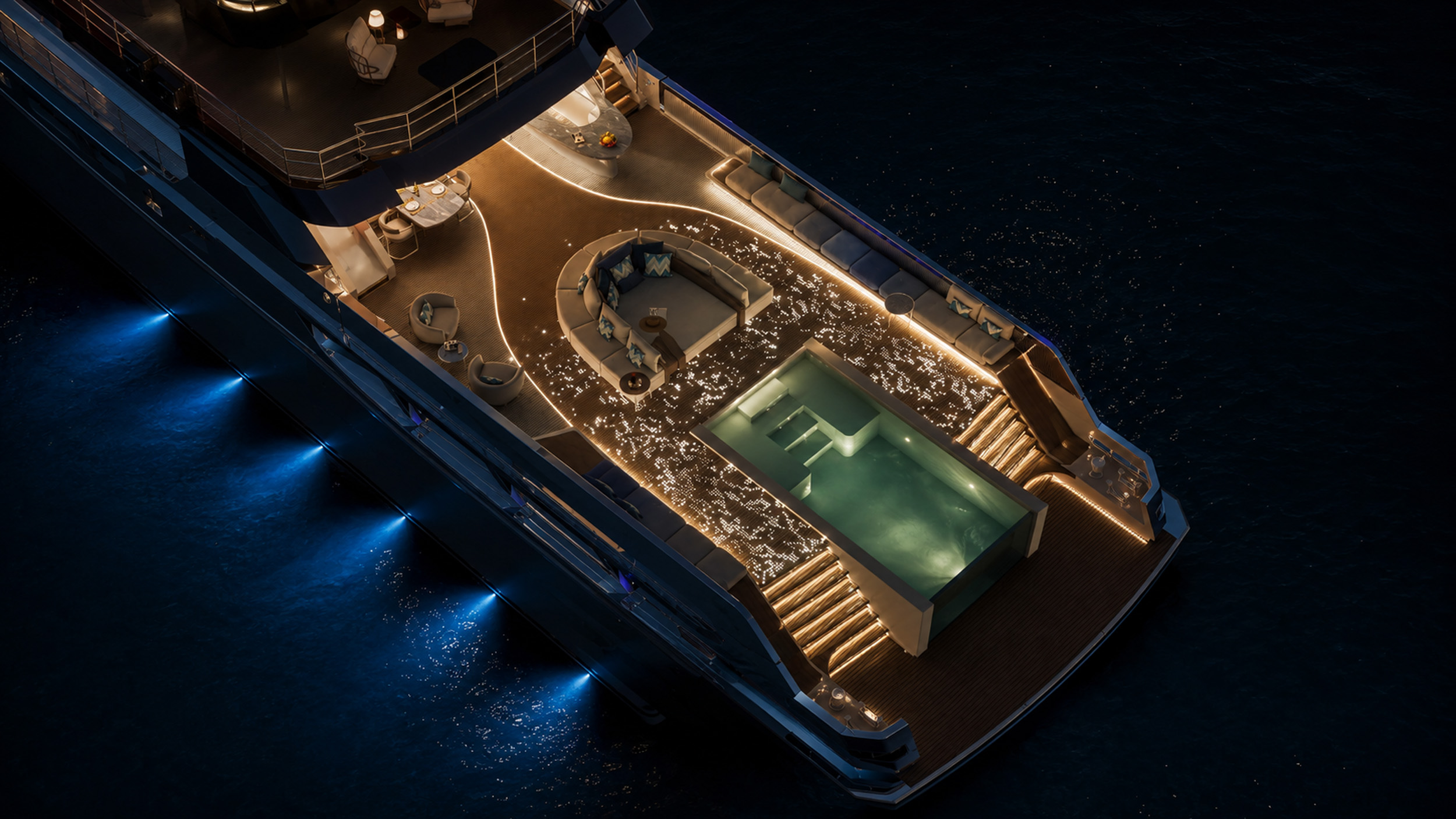
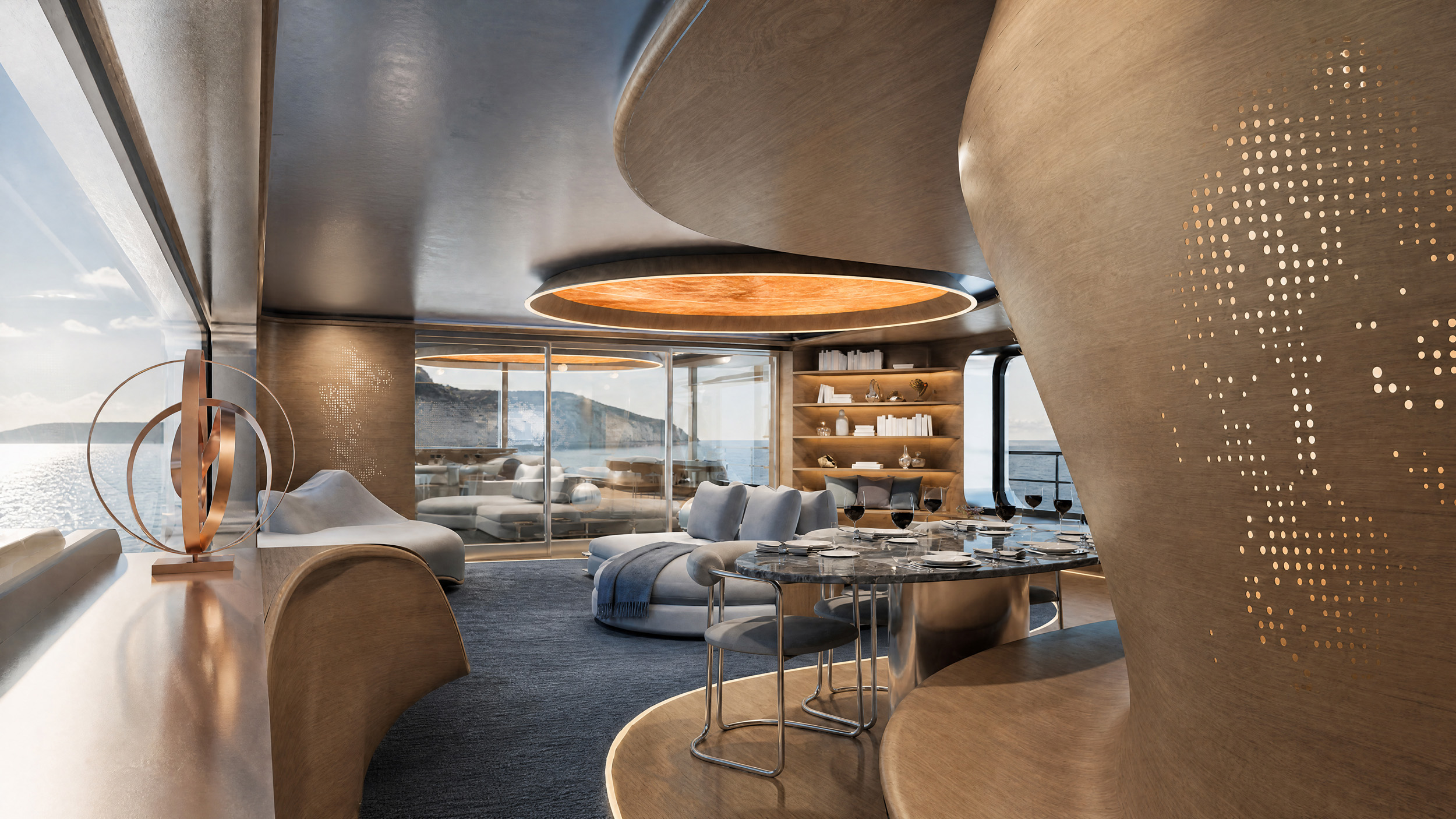
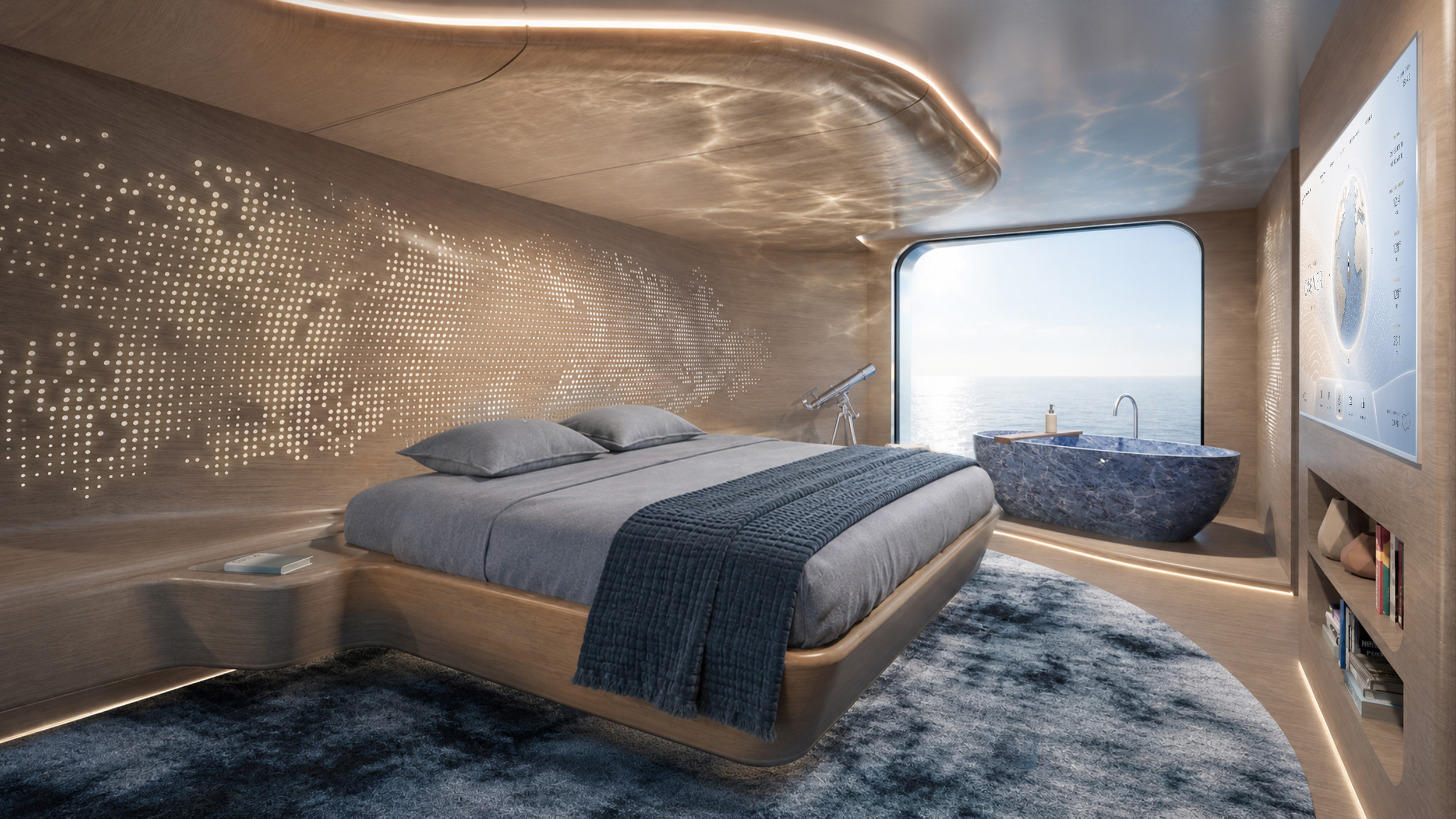
Promoted by Cantori in collaboration with Cantiere delle Marche, the challenge invited selected studios to reinterpret the owner’s cabin, main saloon and main aft deck of a Flexplorer 146, integrating Cantori’s furniture into the distinctive spatial and functional conditions of a yacht.
The challenge marked the studio’s first encounter with yacht design, extending a practice developed across architecture, scenography, opera and live performance into a completely new design context. The selected studios were all approaching the yachting sector for the first time, making the competition an opportunity to question how different creative languages could respond to the spatial, functional and experiential conditions of life aboard.
Music formed the creative theme of the competition. The participating studios were invited to interpret the artistic language of figures representing different periods and genres, from jazz and cinematic composition to progressive rock and contemporary rap. .
From this starting point, Giò Forma developed the creative concept, interior design, visual identity, spatial narrative, material palette and lighting approach, drawing from the work of Ennio Morricone and his ability to transform sound into atmosphere, tension and emotion. The project adopts the principles of composition as a design method: rhythm, pause, repetition and crescendo guide the relationship between volumes, surfaces, furniture and light.
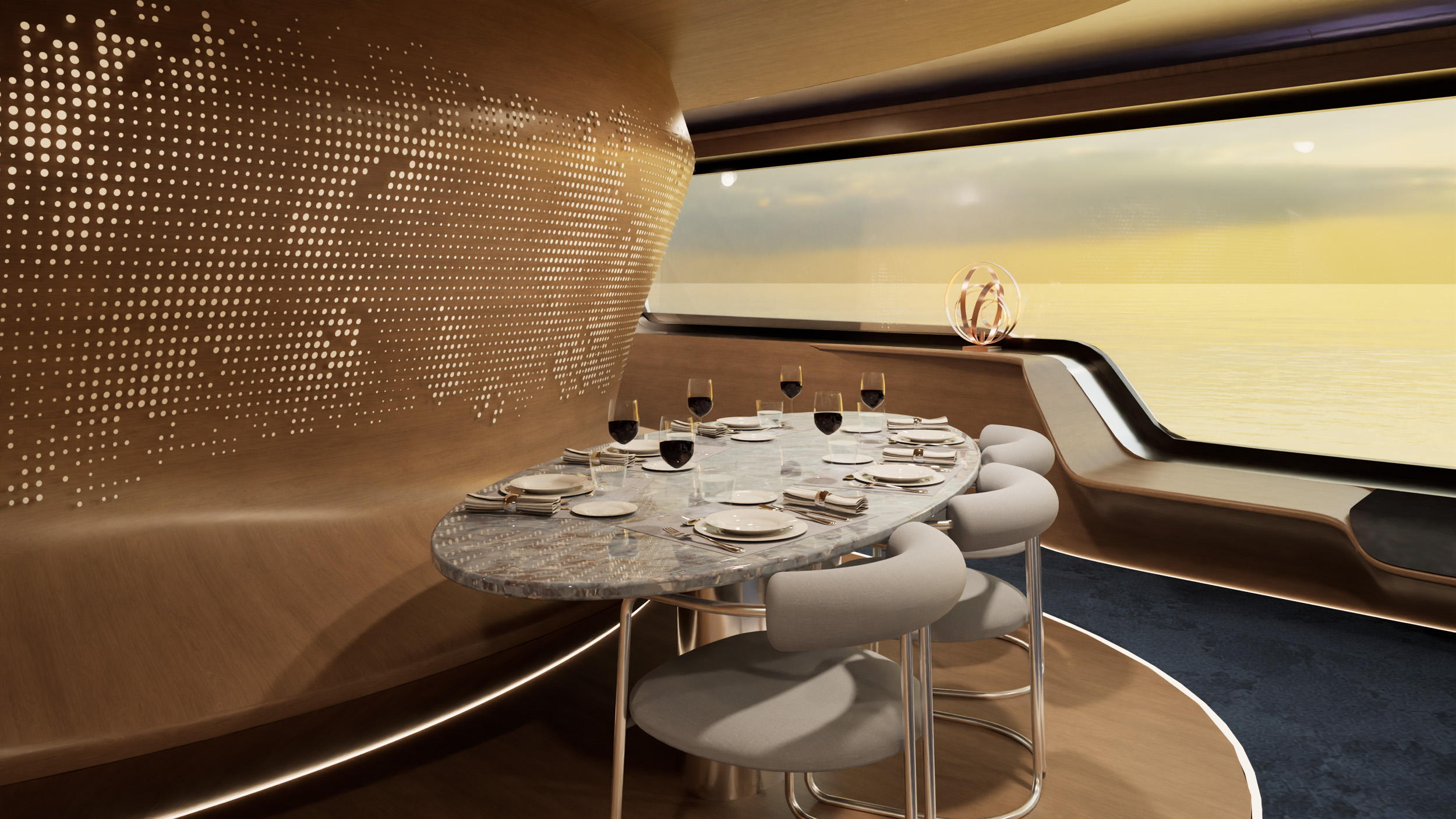
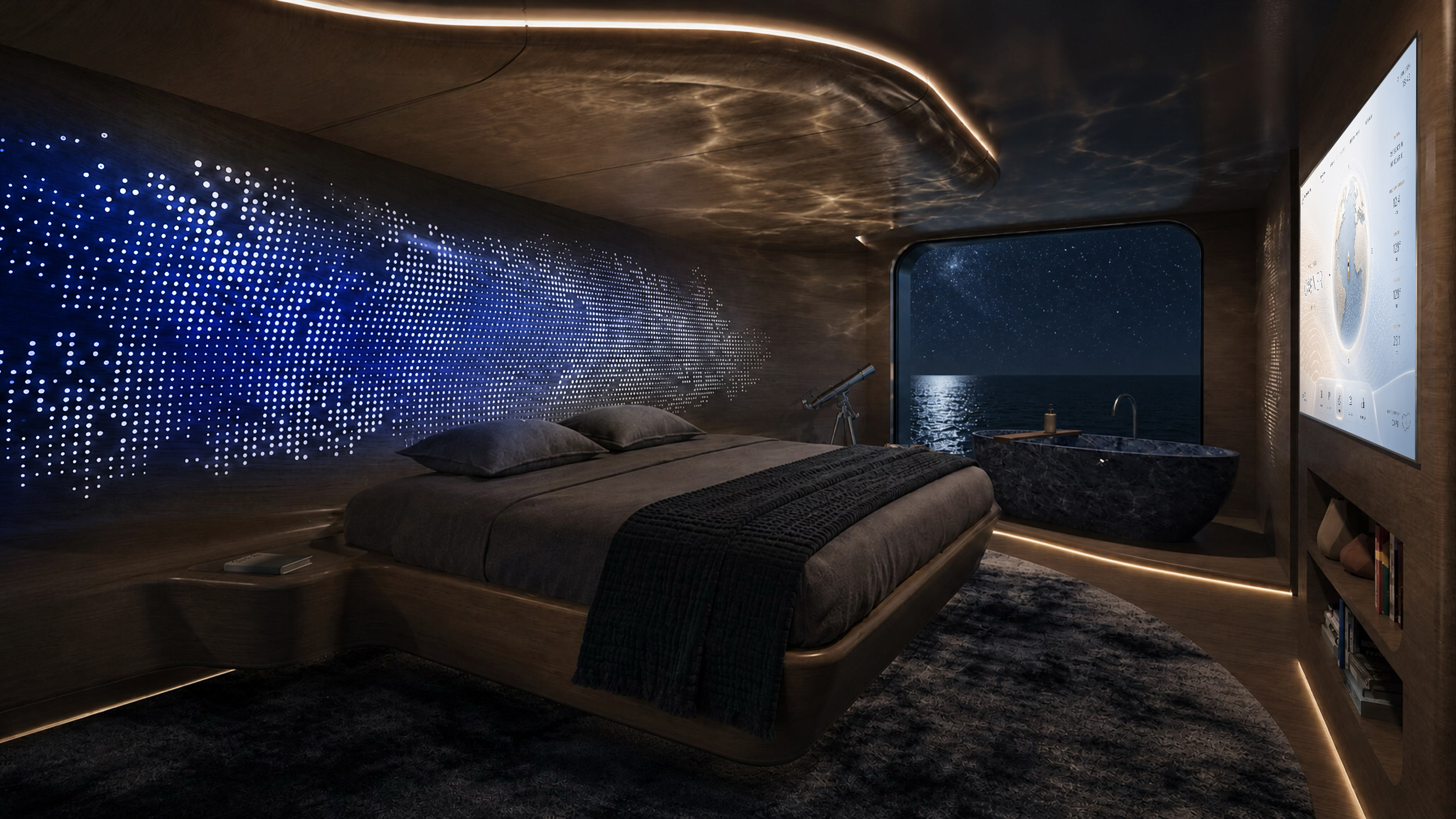
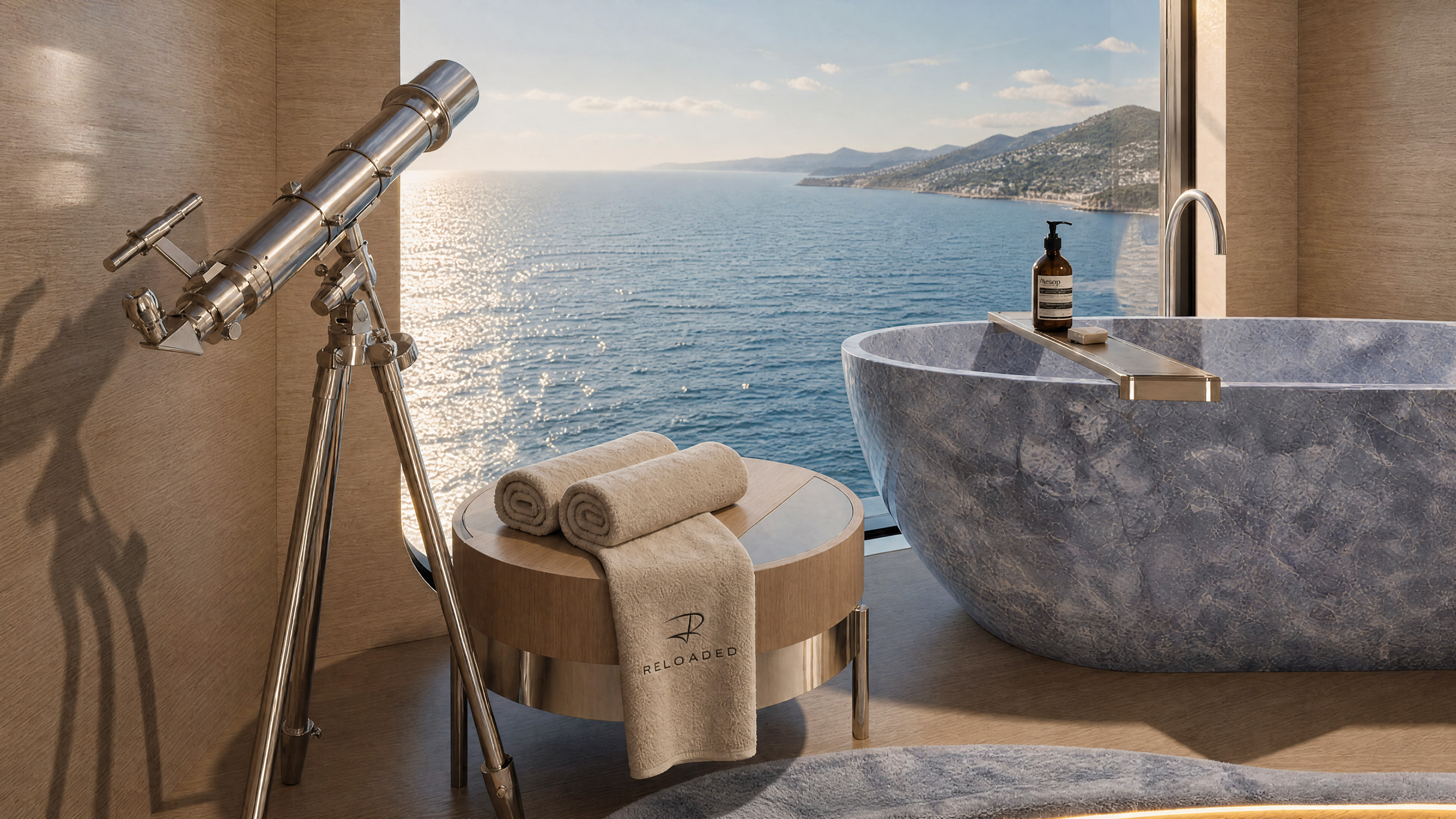
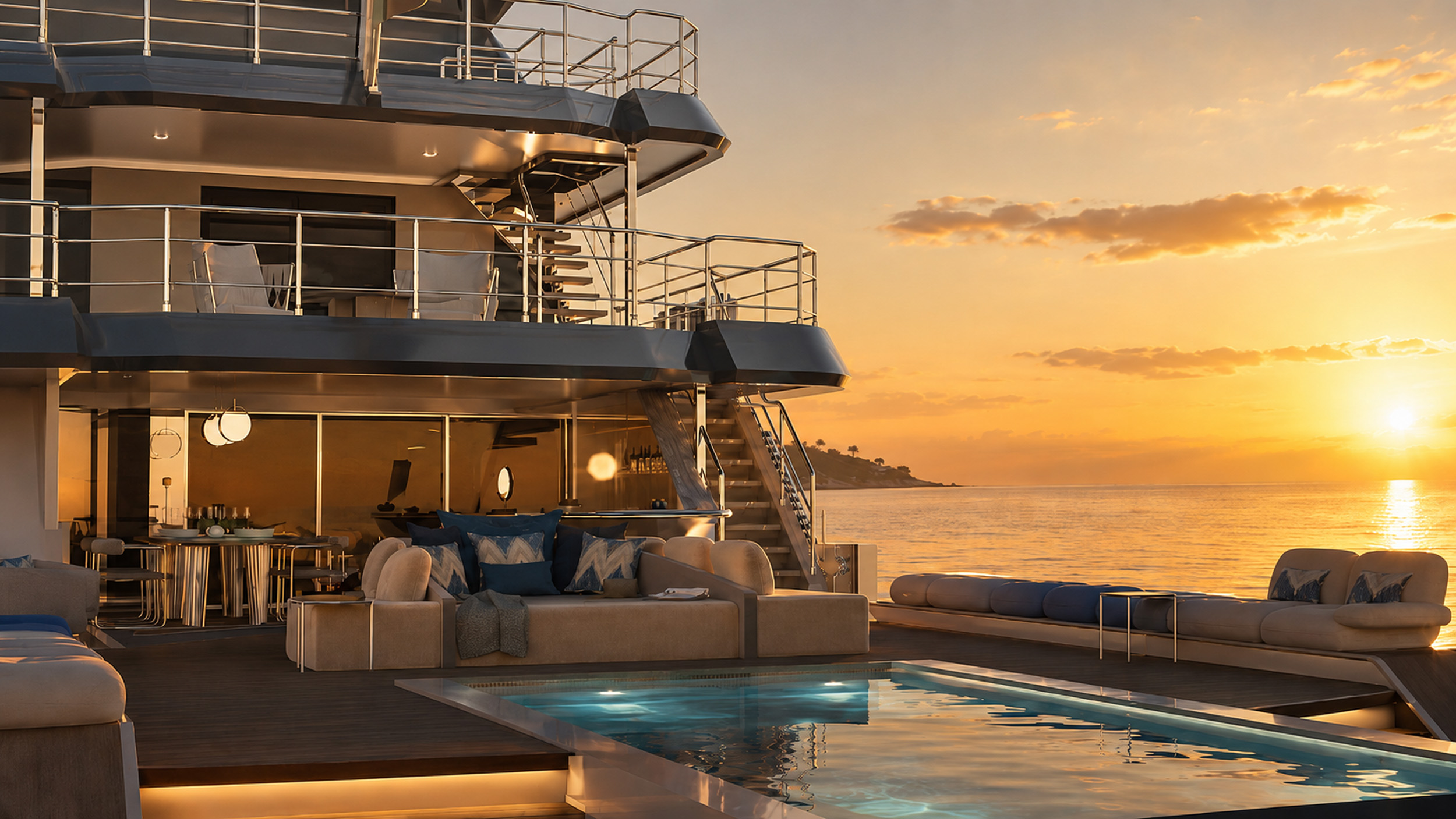
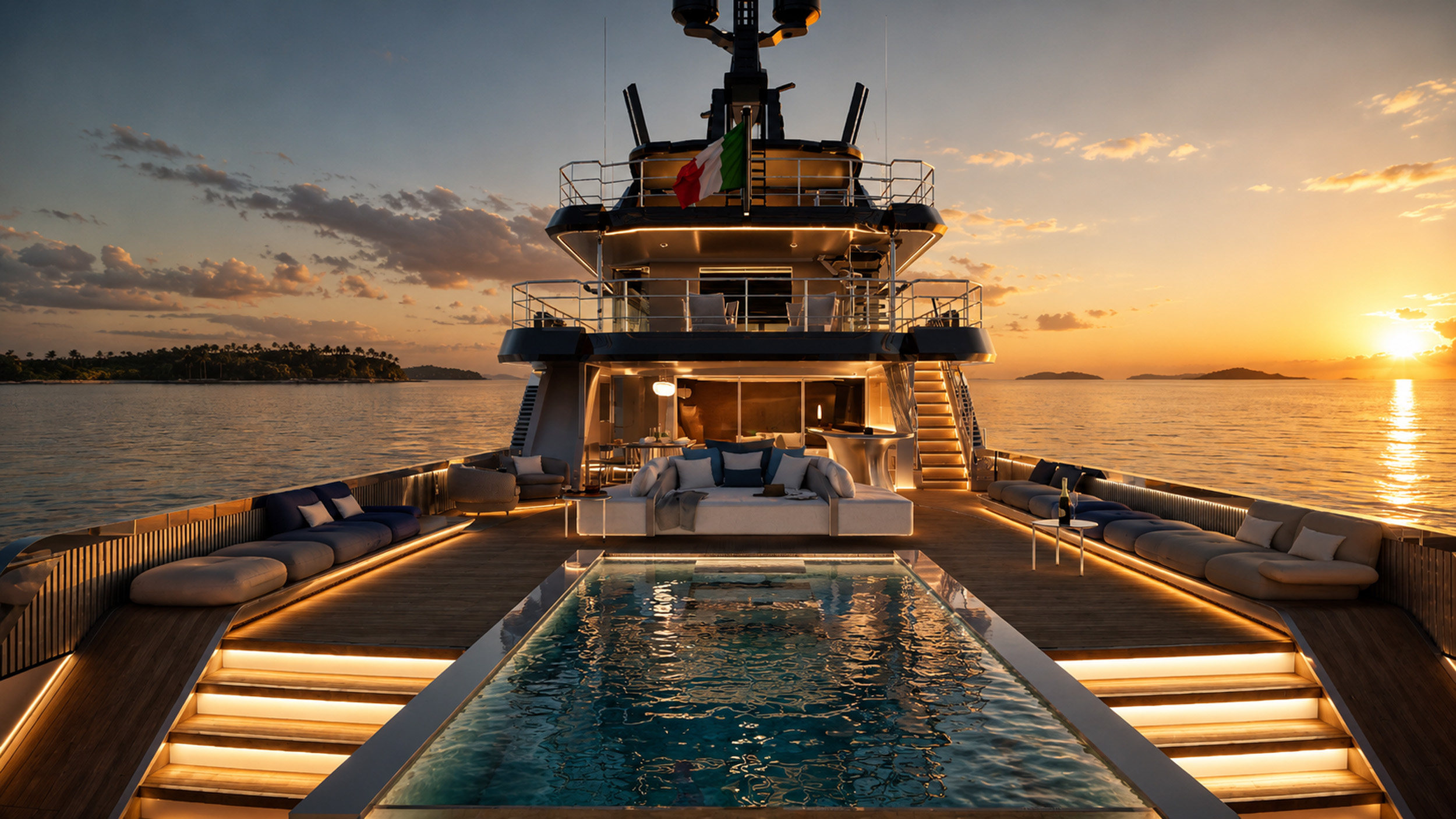
The yacht is conceived as a spatial score, with the three environments unfolding as different movements within the same composition. The main aft deck establishes an immediate relationship with the horizon and the surrounding landscape. The main saloon translates rhythm into a fluid and social interior, while the owner’s cabin offers a quieter and more intimate expression of Morricone’s emotional language. Cantori’s furniture becomes part of this sequence, responding to the scale, movement and atmosphere of the yacht rather than appearing as a collection of isolated objects.
The geometry draws on cymatics, the visual manifestation of sound through vibration. Curves, waves, circles and repeated lines translate an invisible musical structure into spatial form. Warm wood, reflective metal, marble and soft textiles create a tactile palette of amber tones and changing reflections, balancing cinematic intensity with the comfort and intimacy of a residential interior.
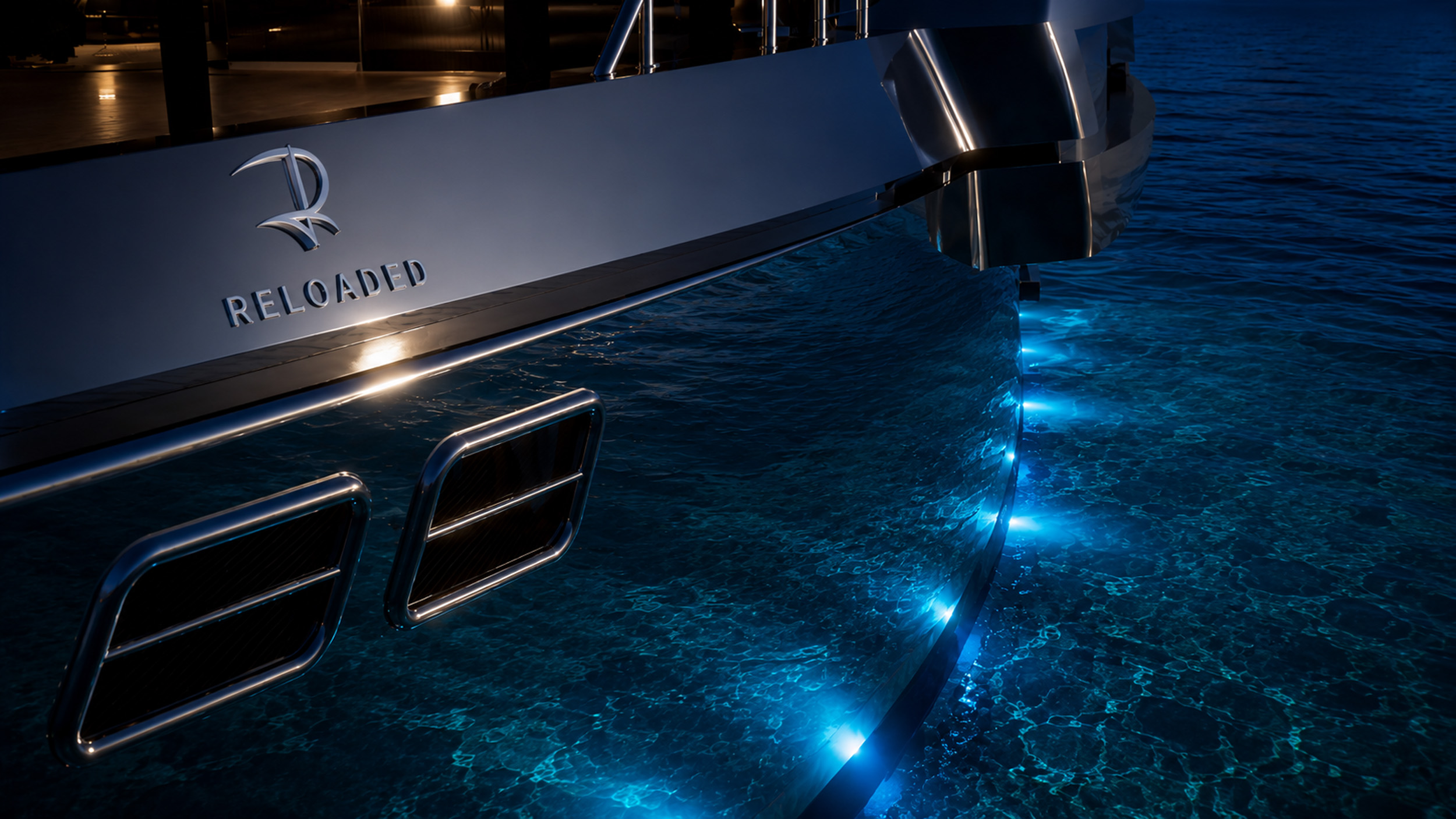
The same conceptual language shapes the project’s logo and visual identity. The gesture becomes a sign. Its form originates from movement, bringing together the sweep of a conductor’s hand and the trace left by a vessel as it moves across the water. Music, gesture and navigation converge within a single graphic mark, extending the identity of Morricone Reloaded beyond the interiors and into a coherent visual system.
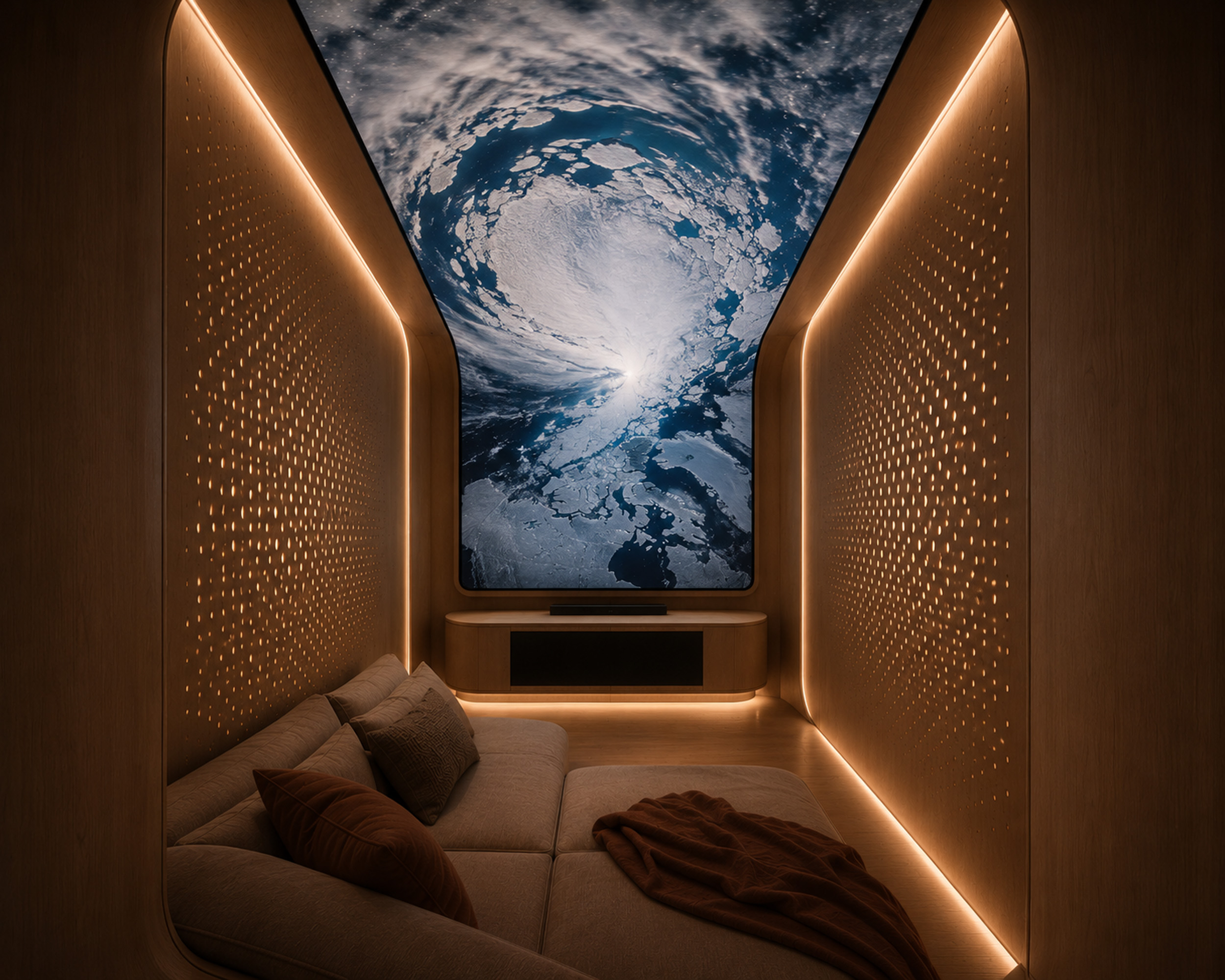
Light acts as a narrative element throughout the project. It reveals materials gradually, follows the changing conditions of the sea and transforms the perception of each environment over time. This relationship reaches its most immersive expression in the Hidden Room, conceived as an experience within the experience, where sound, light and material converge within an intimate spatial sequence.
In the exterior visualisations, reflective surfaces amplify the relationship between the yacht and its surroundings, incorporating the sea, sky, weather and movement into the perception of the project.
Recognised by the jury as one of the winning projects, Morricone Reloaded brings together the rigour of composition and the freedom of experimentation. Music becomes space, not as a visual reference, but as a structure through which identity, atmosphere, movement and experience are composed.